Lesson 02 · about 5 minutes
Wallet or exchange?
They can both be part of using crypto, but they do different jobs. The key question is who controls access to the assets and who is responsible for keeping the recovery details safe.
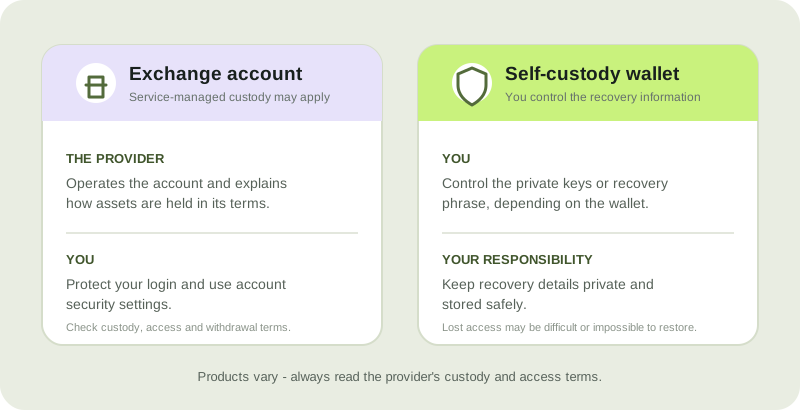
A simplified comparison. Actual custody arrangements depend on the service and its terms.
Two different arrangements
An account is not always a wallet
A centralized exchange is a service where customers may buy, sell, or exchange crypto assets. Depending on its setup, the provider may hold assets on a customer's behalf. Read the service's custody and withdrawal terms to understand the arrangement.
A self-custody wallet gives the user control of the private keys or recovery information, depending on how that wallet works. That control also means the user must protect the recovery details. If they are lost, access may be difficult or impossible to restore.
Fees can appear in different places
Before using a service, check whether it charges a trading fee, deposit or withdrawal fee, or another cost. A displayed price may also differ from the final execution price. The exact fee schedule and terms vary by provider and country.
- Look for the fee schedule before confirming an action.
- Check which network a transfer uses and whether a network fee applies.
- Understand how account access and withdrawals work.
Compare the responsibilities
With a service-managed account, you rely on the provider's systems, policies, and ability to serve you. With self-custody, you take on more direct responsibility for keys and recovery. Neither label alone tells you whether an option is right for your situation.
Pause and check
Can you explain who controls the keys in the service you are considering, what fees apply, and what happens if you lose account access?